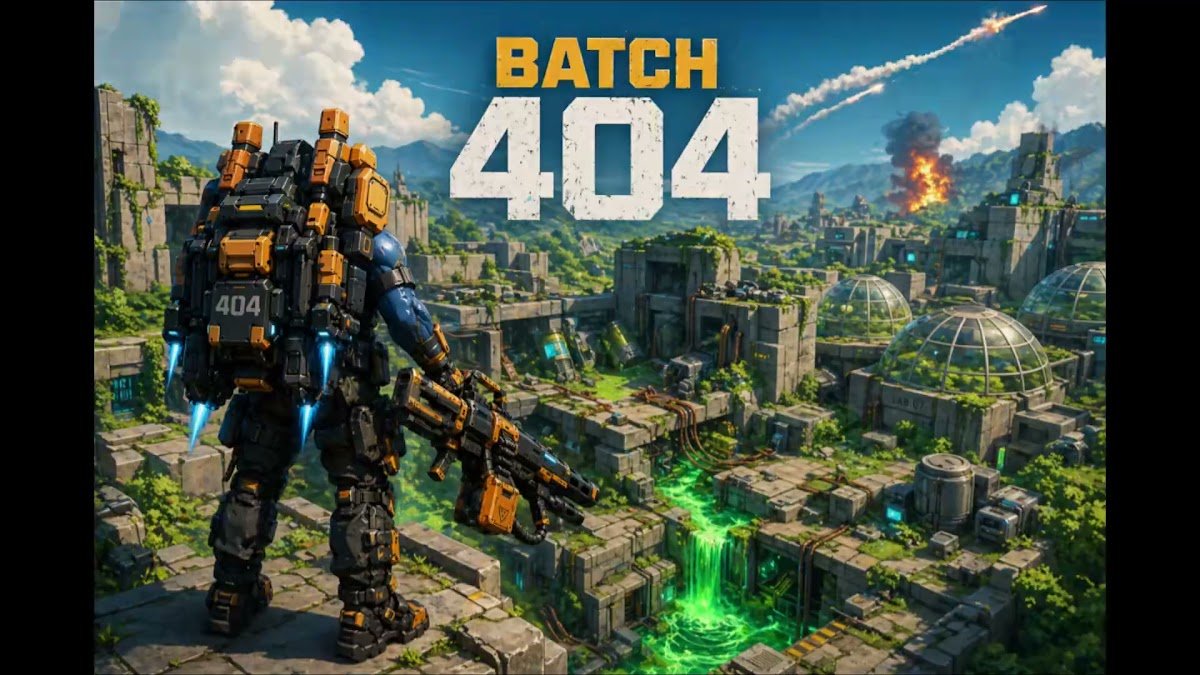
A top-down sci-fi co-op roguelike shooter that blends horde destruction in the spirit of Alien Shooter and Crimsonland with survivors-like progression. I develop it solo — from gameplay systems to the visual layer.
Gameplay systems, technical art, VFX, UI implementation, optimization, tools, production
Engine
Unity
Status
In development, playable build available
Key art — promotional artworkCurrent gameplay overview — combat, abilities, progression, and level traversal.
How it’s built
Selected technical work
Systems I designed and implemented in the project.
01
Persistent blood decals
The problem. The map is effectively infinite, so blood can’t live in a fixed texture. The texture window has to travel with the camera, and stains would normally smear, jitter, or vanish every time it recenters.
My contribution. I designed and implemented the decal system end to end.
Implementation details
A single 1024×1024 RenderTexture covers a 100-meter window around the camera and rebuilds when the player moves too far. Every stamp is stored in world space in a spatial grid, so when the window recenters, the system queries only the relevant cells and redraws the visible stains from history. Texel-aligned snapping keeps the image stable across recentering, CommandBuffers are pooled, and stamps are plain structs — the decal path allocates nothing per frame.
Outcome. Stains persist over large distances and are redrawn from history when the window recenters.
Gameplay recording — horde combat; ground stains remain at fixed positions as the fight moves.
02
VFX management
The problem. Ability-heavy combat spawns many effects per frame. Creating a VisualEffect component per request adds setup cost exactly when the frame is busiest.
My contribution. I built the effect dispatch layer that combat and environment effects run through.
Implementation details
Effect requests are collected as plain structs, grouped by asset type, and flushed once per frame through shared VisualEffect components via SendEvent. Persistent emitters such as flames and trails use a reusable slot system with a flat array and a free-stack for allocation and release.
Outcome. Simultaneous effects run through a small, fixed set of shared components instead of one component per spawn.
Gameplay recording — an ability shield holding against enemy pressure.
03
Enemy spatial queries
The problem. Separation steering and area abilities need neighbor information for large numbers of enemies. Comparing every enemy against every other enemy doesn’t scale with horde sizes.
My contribution. I implemented a spatial hash grid used for enemy neighbor queries.
Implementation details
Each enemy registers into a grid cell based on its position, and queries read only the surrounding cells instead of the whole scene. A frame-stamp integer invalidates the table between frames without clearing memory or iterating over it.
Outcome. Query cost follows local density rather than total scene population.
04
Reusable gameplay systems
The problem. A solo-built game accumulates systems quickly: combat, progression, effects, and UI all need to share state safely, without per-frame garbage or initialization-order bugs.
My contribution. I built the shared systems the rest of the game runs on.
Implementation details
A generic object pool replaces Instantiate/Destroy for enemies, projectiles, and effects, using swap-remove and deferred despawning so in-flight callbacks can finish safely before an object returns to the pool. A typed event bus passes structs as in parameters, and subscriptions that arrive while an event is publishing are queued until the dispatch finishes. Stat bonuses stack through a layered modifier resolver following (base + Add) × (1 + Mul).
Outcome. Gameplay code communicates through the bus instead of hard references, hot paths reuse pooled instances, and power-ups compose through one modifier stack.
Other systems in the project
Bullet penetration
Penetrating shots collect hits with SphereCastNonAlloc into a shared fixed-size hit buffer, sort them by distance with insertion sort, and track already-hit targets per projectile so overlapping frames can’t apply damage twice.
Pool prewarming
Prewarmed objects initialize through IPoolable.OnDespawned() directly, skipping the Start() cycle so spawning doesn’t depend on scene services being ready.
These sections describe the implementation as built in the project. Benchmark figures are not presented.
Try the build
Batch 404 is in active development, with a playable build on itch.io.